Dyeing Process
This collection used multiple types of natural dyes. Pinks were achieved through avocado pit/skin dye, tans were made through pecan shell dyes, dark browns were made through walnut shells, and the prints were made from eco-printing techniques. Since I had a variety of fibers I was upcycling, I used multiple different mordanting methods to help the fabrics retain their dyes. After completing different case studies in avocado dyeing and eco-printing, I selected which mordanting methods would work best for this project.
Mordanting Methods Used
Through my case studies, I found that silk does not require mordants to take color effectively, and the mordants have little effect on color retention for silk. So, I did not mordant any of the 100% silk fabrics I used for this project to achieve the most natural colors possible. For the cotton and rayon fabrics dyed in avocado dye, I used alum and chalk as mordants to achieve a blush pink color. For the laces, cottons, and rayon fabrics being dyed in walnut and pecan dyes, I used a combo of tannin, alum, and chalk for the mordant to enhance the natural brown of the dyes.
Avocado Dye Process
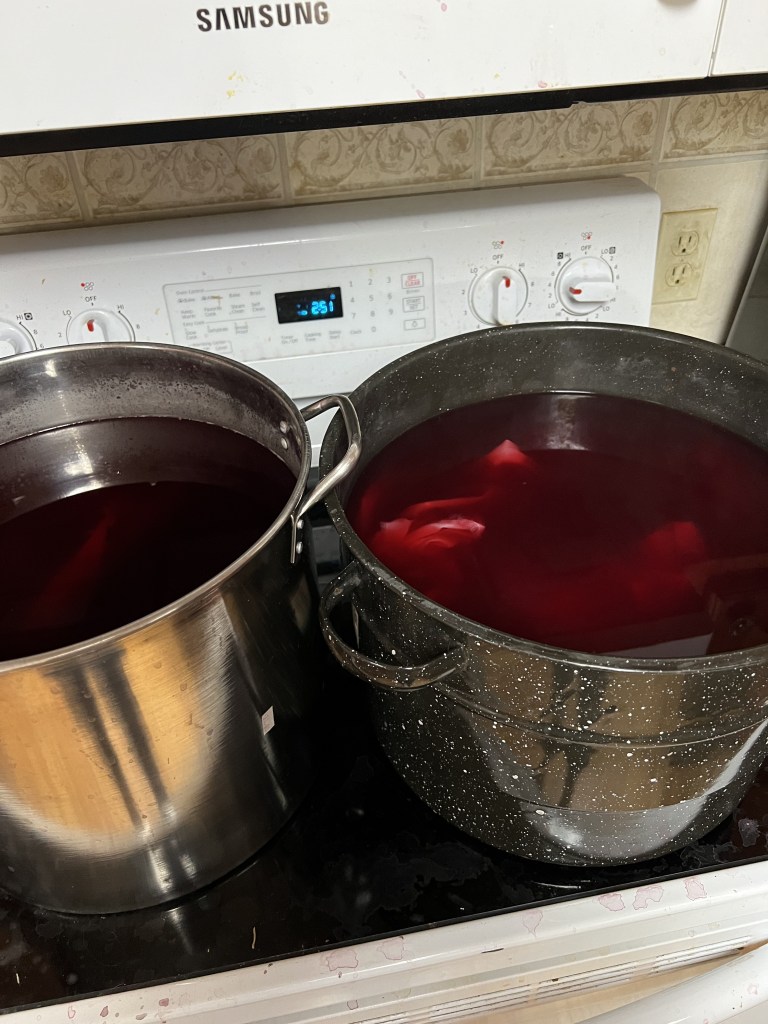
Throughout the year, I froze avocado pits and skins after using the avocados for food so I could create a pink dye bath to use for this collection. I used both avocado pits and skins to extract the dye to make it as saturated as possible using the methods described on this case study page. Since silk takes the dye more readily than other fibers, I diluted the dye bath for the silks so I could achieve similar colors regardless of the fabric’s fiber content.
Pecan & Walnut Dye Process
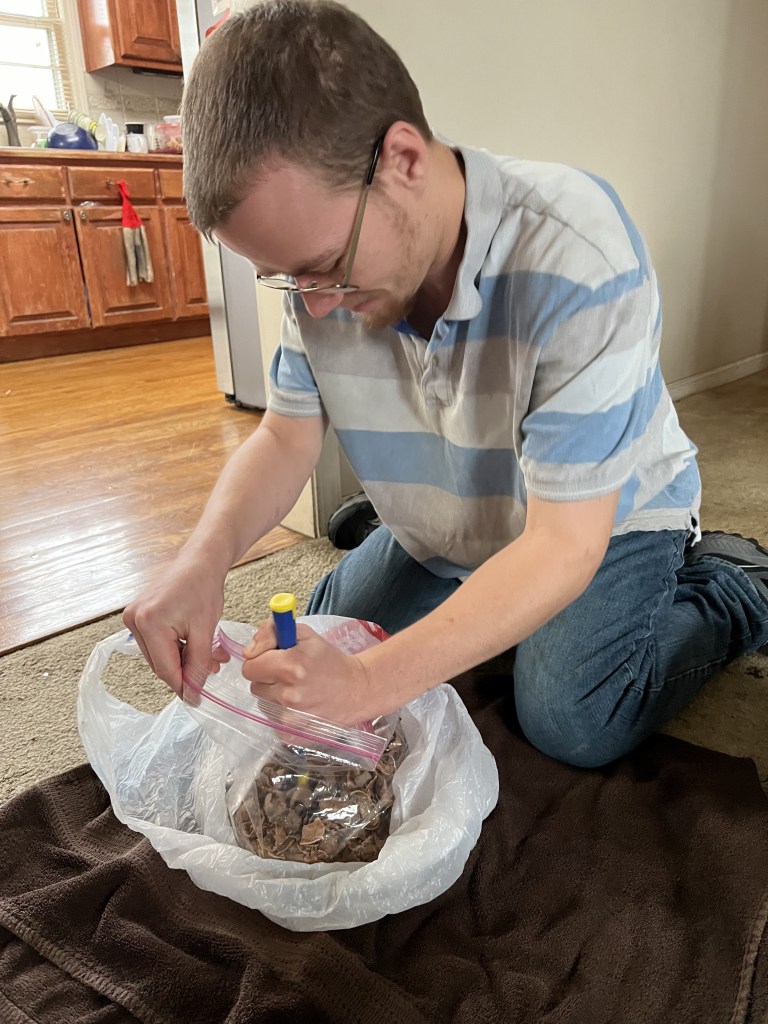
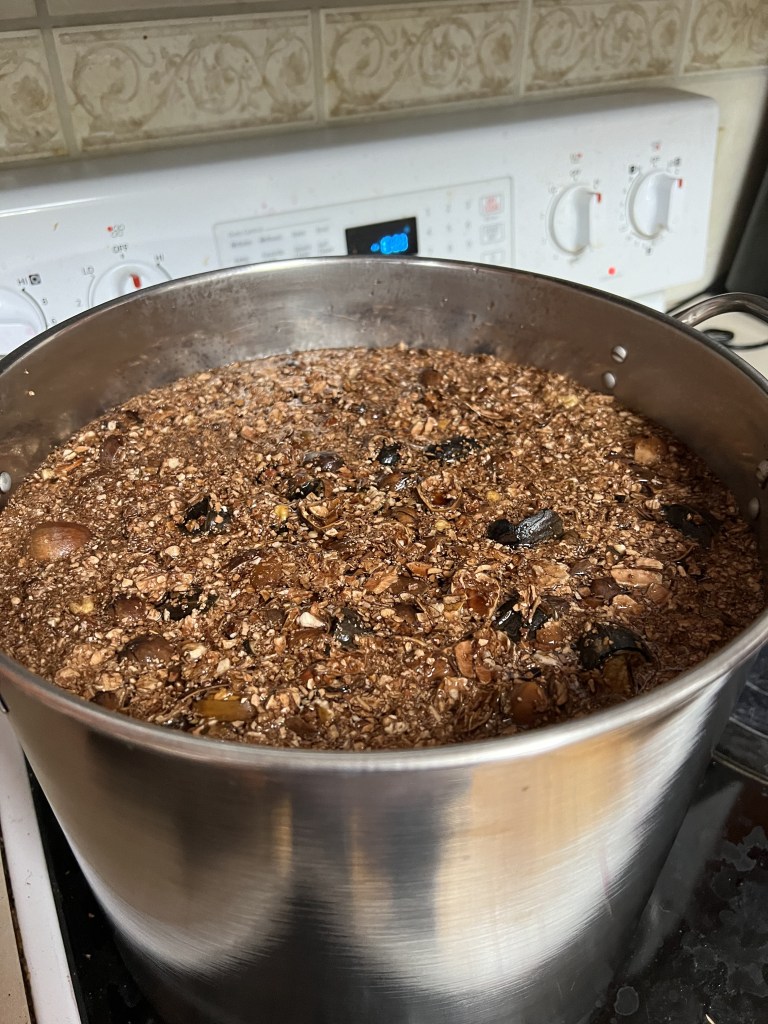
My brother (Christopher Robertson), an agriculture professional, assisted me with gathering pecans and walnuts for this project. Since he has expansive knowledge about plant health and identification, he was able to help me find pecan and walnut shells locally (in our backyard, at local parks, etc.). Some shells, especially the pecan shells, were also collected from food waste (my family loves roasted pecans, especially when they are still in the shell and have to be opened up). After sorting the pecan and walnut shells, we then crushed them (separately) so I could better extract the dye from them. These remains were then boiled for 2-3 hours. The dye bath was then strained and ready for use. The waste from the dye bath was composted outside (and also eaten by the local squirrels).
Eco-Printing Process
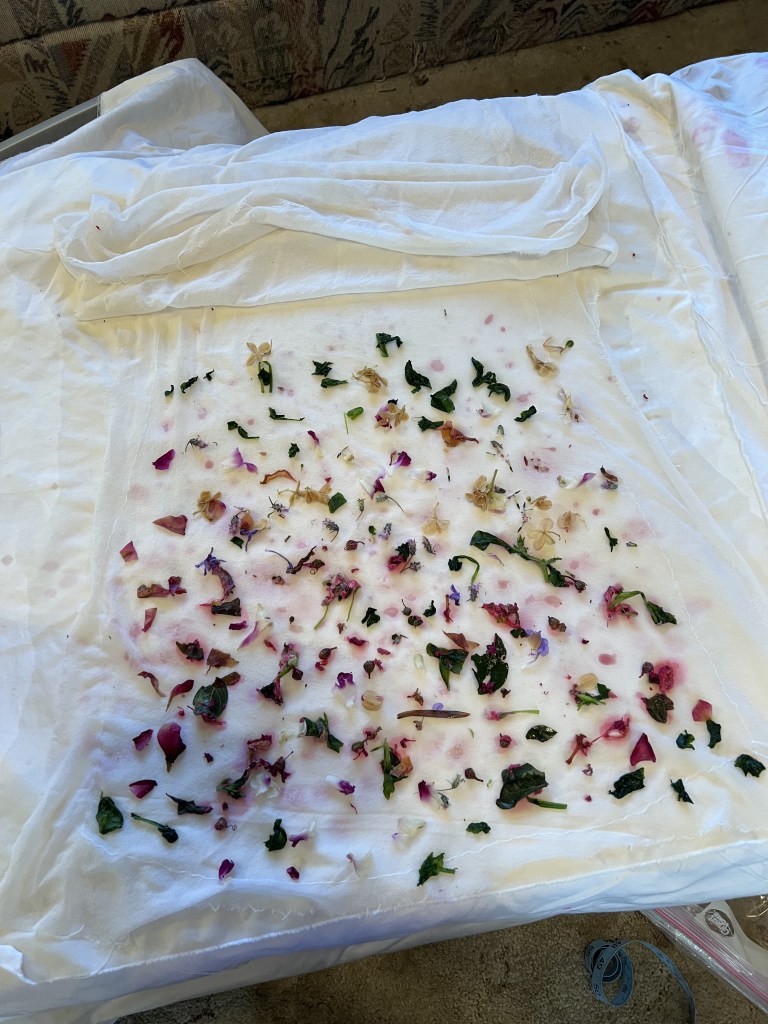
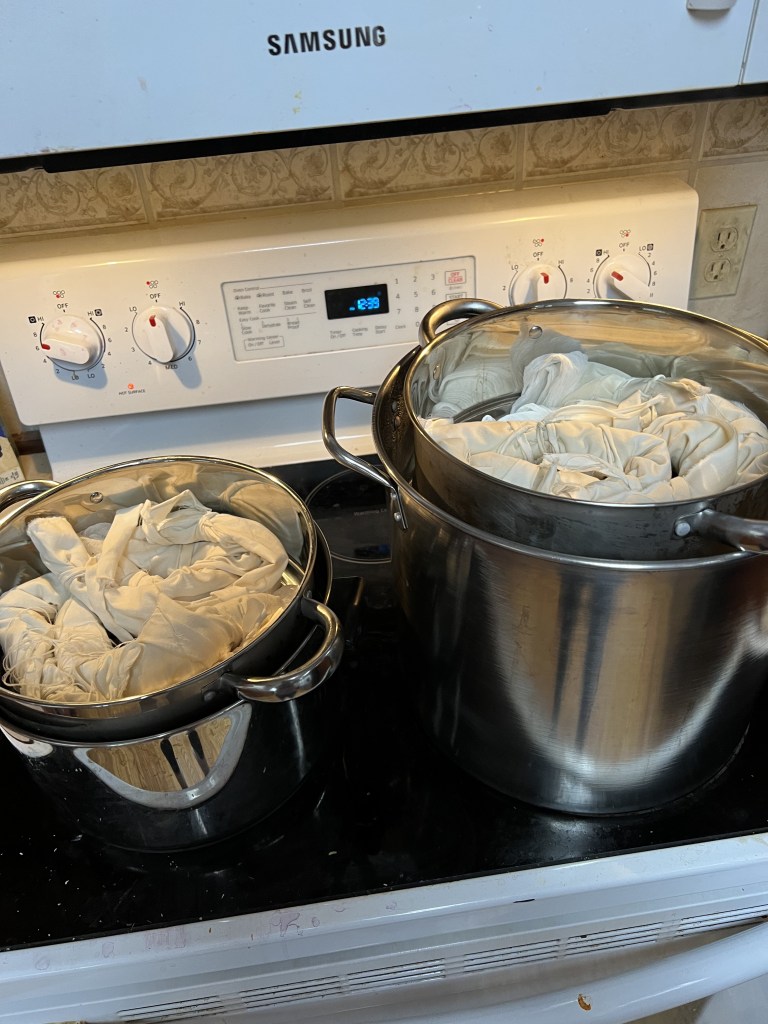
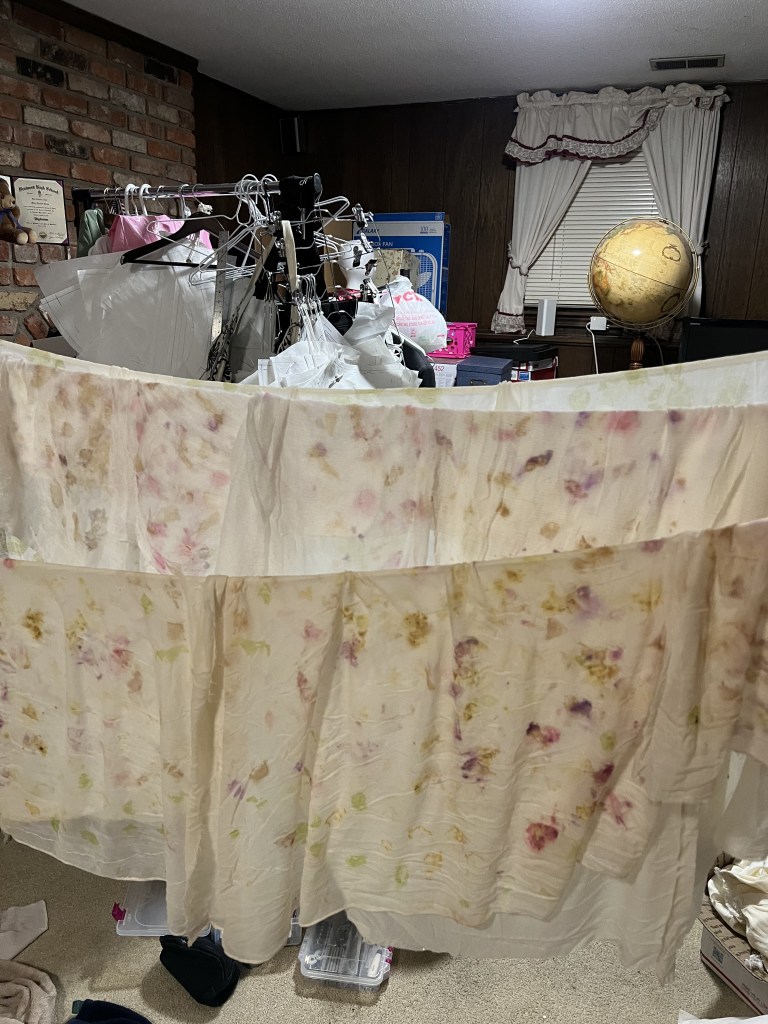
From my Eco-Printing Case Study, I discovered that silk takes eco-printing the best. So, I used exclusively silk fabrics for this method. Christopher also helped me with finding flowers and leaves on the ground that I could safely use for this project. We froze what we found so I could use them when ready. I scoured the silk fabrics for 2-3 hours, then placed the natural elements on it for printing. Then, I pounded the elements into the fabrics, rolled them up, and steamed them for 1.5 hours each. . Once this was complete, I rinsed the fabrics and hung them to dry.
 Fashioned by Bethany